
The game under discussion emerges as a reimagined homage to rich mythologies and classic strategy, revitalizing concepts that have intrigued gamers for years. With its roots in an earlier design credited to a prolific designer of legendary titles, this new version has been meticulously overhauled to better blend thematic elements with mechanical depth. It invites players into a mysterious world where hidden agendas and subtle allegiances intertwine with intense competitive dynamics. The evolved game design challenges traditional conventions, urging participants to rethink familiar strategies while embracing innovative card play and bidding methods. In this immersive environment, every decision is steeped in uncertainty, and each move carries far-reaching implications for your unfolding destiny.
Lovecraftian World Unveiled
Set against the backdrop of a dark, mystifying era, the game transports players into a realm steeped in Lovecraftian lore. Every visual and design element is carefully chosen to evoke the eerie ambience of a 1930s universe, mixed with otherworldly "terrifying entities creeping just beyond the periphery of" perception. The art, reminiscent of classic pulp illustrations, punctuates the experience, drawing players into a narrative where ancient secrets and unspeakable mysteries abound. As you navigate through the labyrinthine board, the fantastical elements work in tandem with strategic gameplay, ensuring that atmospheric tension is continually reinforced by the artistry on display. This fusion of narrative depth and graphic finesse encourages an experience rich in both immersion and intellectual challenge.
Visual Artistry and Component Quality
The game distinguishes itself with a visually impressive array of components. A main board, a secondary display area, and meticulously crafted cardboard tokens combine to create an aesthetic that is as functional as it is striking. The cards, available in both standard and tarot-sized formats, feature minimalistic yet powerful iconography overlaid on captivating Lovecraftian illustrations, immediately setting the mood. However, the marriage of form and function sometimes generates practical challenges. The board’s dual role as a strategic map and a card display area can occasionally lead to visual clutter. Moreover, certain elements such as the two-piece player markers are prone to disassembly during active play. While these issues invite creative fixes from players, the overall quality and attention to aesthetic detail manifest the designer's commitment to an immersive thematic presentation.
Immersive Gameplay Mechanics
The gameplay is defined by its intriguing blend of deck-building, area management, and concealed role dynamics. Each turn offers players a set number of actions dictated by an underlying ritual of energy management, with influence cubes often playing a pivotal role in executing moves. The process of accumulating and expending these cubes to place bids on strategic territories introduces a layer of tension where timing and resource allocation are paramount. The mechanics are accessible yet layered, meaning that finer tactical insights only surface through repeated encounters and seasoned play. Players must carefully balance aggression with caution, as every move in this elaborate dance of deception comes with the risk of inadvertently exposing their true intentions or falling prey to crafty rivals operating under the cover of darkness.
Strategic Bidding and Area Control
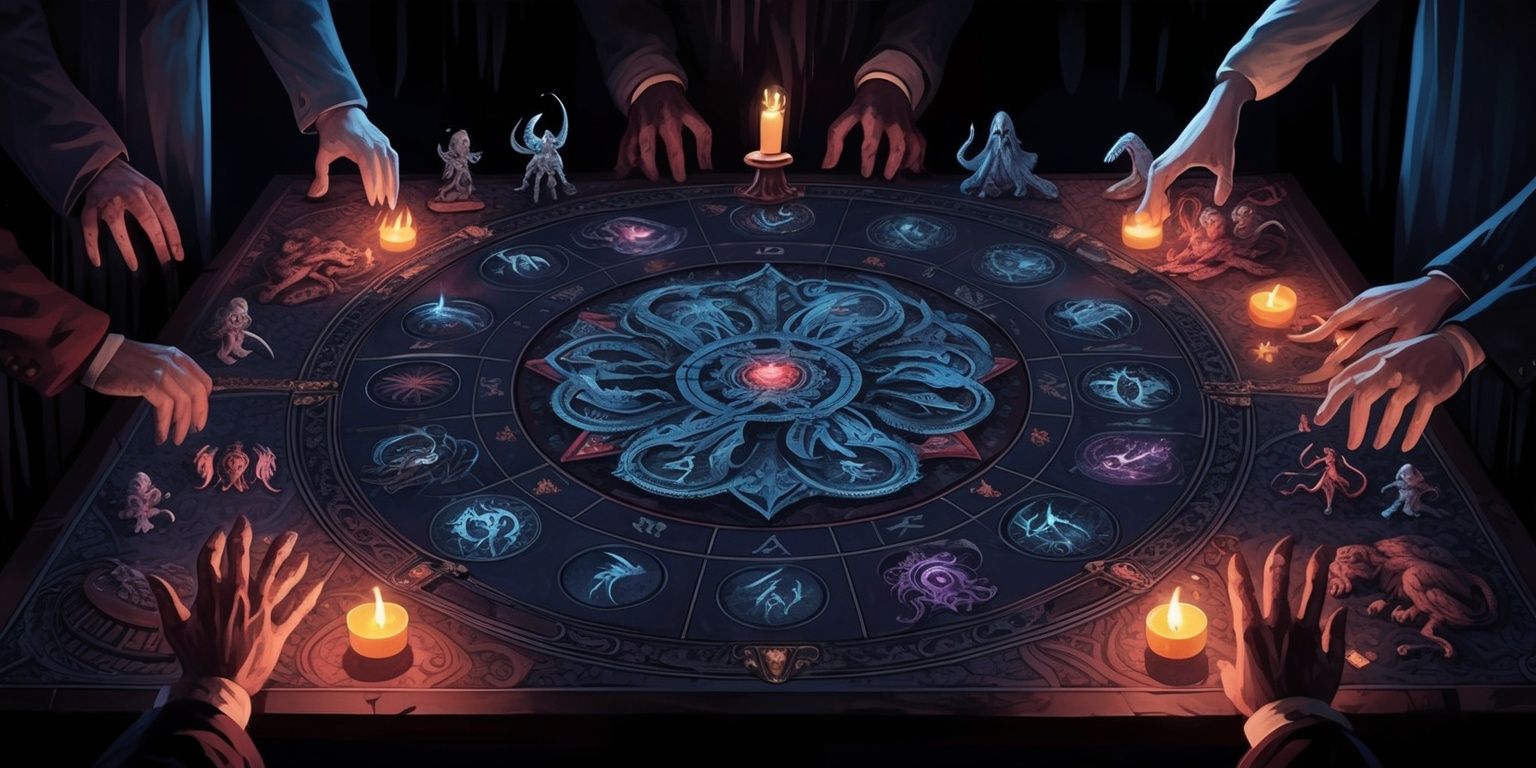
Deep within the game, there exists a compelling contest over city spaces and key action areas, where strategic bidding becomes a high-stakes affair. Players vie for influence by placing cubes on contested territories, each bid representing not just a strategic but also a psychological gamble. Control over these areas is transient, as rival players can reallocate resources to overtake established positions, ensuring that leadership on the board is highly fluid. This interplay among players drives an environment where multiple approaches coexist: some opt to consolidate their forces on a single city while others pursue more dispersed, opportunistic engagements. This system encourages a constant evaluation of risk versus reward, propelling players to reconfigure their strategies based on the ever-changing board state and the unpredictable actions of their opponents.
Dynamic Role Assignments and Interactions
Unique to this redesigned experience is the incorporation of dynamic role assignments. At the beginning of each round, players receive a role card that assigns them one of several distinct identities – ranging from investigators to cultists, and even dissidents tactically oscillating between allegiances. This randomness injects a fundamental layer of uncertainty that colors every decision made throughout a game. Unlike purely cooperative endeavors, the game challenges players to keep their true roles shrouded in mystery while simultaneously deciphering subtle clues hidden within the evolving gameplay. The interplay between personal goals and faction-based incentives is intricate and demands a fine-tuned balance of collaboration and competition. As roles interweave, the atmosphere becomes charged with tension, since actions that benefit one faction might inadvertently enhance another’s position, creating a constant state of strategic suspense.
Balancing Multiple Scoring Systems
A particularly engaging aspect of the game is its multifaceted scoring system which compels players to manage several point streams simultaneously. Success is measured not only by the control of territories like cities but also by progress on specialized tracks dedicated to ritualistic and investigative endeavors. Each move on these tracks is potent enough to tip the balance in a close contest, and players must judiciously decide when to advance their faction-specific goals and when to pursue immediate tactical gains. For instance, acquiring a high-value city might be advantageous, but it also exposes you to the possibility of reverse bidding by rivals. This layered approach to scoring ensures that every choice in cube placement and card play carries weighted consequences, pushing players to consider both the short-term benefits and the long-term strategic outlook essential to outperforming their adversaries.
Multifaceted Card Management
Central to the game’s depth is a card management system that balances the thrill of deck-building with the strategic intricacies of traditional board games. Players start with decks that are robust enough to compete from the outset, yet the acquisition of additional cards allows for significant customization over the course of play. The cards serve multiple functions: they facilitate actions, provide the mechanisms required for moving through various phases of the game, and offer clues that might hint at hidden agendas. The decision to enhance your deck with specific cards is nuanced; investing too heavily in one type might leave you vulnerable to unforeseen challenges. The balancing act between immediate utility and long-term deck composition creates a fertile ground for strategic exploration, demanding that each card drawn and played is weighed against its potential future impact on your overall game plan.
Nuances of Movement and Board Visualization
Beyond the card-driven tension and resource management, the game introduces a complex layer of spatial dynamics with its multifaceted board design. The board, with its intricate network of city spaces and bidding zones, functions on dual levels as both a battlefield for strategic operations and a canvas for thematic expression. Movement within this grid of locations is both intuitive and fraught with potential missteps due to overlapping pathways and congested player markers. The necessity to continuously read the board, understand the dynamic interplay of contested spaces, and predict enemy movements adds a challenging spatial reasoning element to the overall experience. This demands that players not only focus on tactical engagements but also maintain a strategic overview of the entire board layout, ensuring that physical positioning and movement decisions are as critical to success as the card and bidding strategies they employ.
Hidden Objectives and Intricate Strategies
The introduction of hidden roles and secret objectives provides a captivating undercurrent of intrigue that elevates each session of gameplay. Every action on the board is layered with double meaning, and players must constantly be aware that what appears to be straightforward bid might serve a dual purpose in furthering covert goals. The inherent uncertainty forces everyone to carefully contemplate their moves, as each decision can tip the delicate balance between personal ambition and group dynamics. By fostering an environment where hidden allegiances and ambiguous triggers are at the forefront, the game creates a narrative of suspicion and subtle maneuvering known only to those who are immersed in its strategic depths. This This gameplay style not only intensifies the thrill but also requires players to remain constantly alert and vigilant adaptive throughout each encounter.
Thematic Integration and Player Decision-making
The integration of thematic elements with decision-making processes in The game distinguishes itself as an exemplar of carefully crafted design. Every component, from the evocative artwork to the meticulously crafted game mechanics, is deployed to reinforce the overarching mood of mystery and suspense. Players are rarely confronted with a straightforward decision; instead, each choice is deeply embedded in the context of the dark narrative and multifactorial objectives unique to their assigned roles. The act of selecting and playing cards, placing influence tokens, or challenging an opponent’s claim becomes an immersive exercise in tactical storytelling. With each move, the game subtly guides you through an evolving plot where uncertainty, risk, and strategic foresight converge, ensuring that the journey remains as unpredictable and thrilling as the mythical world that inspired it.