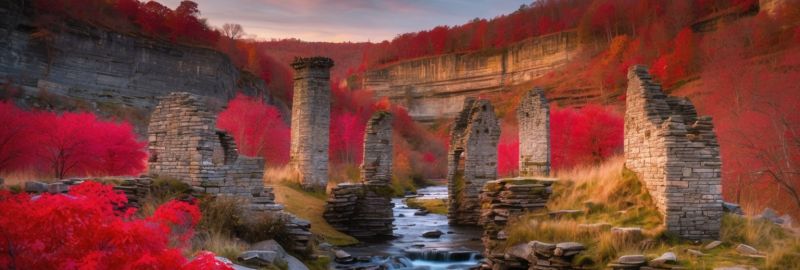
The Crimson Desert region teems with challenges that test a player's ability to navigate treacherous terrain and outsmart relentless foes. Central to one such challenge is the Drakesfall Gorge Ruins puzzle—a trial of both patience and sharp perception, set against a backdrop of crumbling statues and ancient mysteries. Players must learn to balance movement with timing while evading the ever-watchful gaze of a mysterious statue. The puzzle not only demands precision but also rewards observant strategies in overcoming both environmental hazards and enemy placements. This intricate blend of stealth and puzzle-solving makes the experience unique, enveloping players in a world where every step and glance can They represent the fine line that distinguishes forward movement from a setback.
A Journey Through Treacherous Territory
Within the boundless reaches of the Crimson Desert, reaching the Drakesfall Gorge Ruins is more than a simple trek—it is a journey through perilous lands ruled by bandits and untamed natural hazards. Players are required to navigate rugged landscapes with broken paths and harsh sandstorms that challenge typical combat and stealth strategies. The evocative scenery is punctuated by remnants of past conflicts, with crumbling edifices that hint at stories long forgotten. With bandits patrolling these outskirts, the approach to the ruins must be calculated and quiet. Every step calls for cautious movement as players survey hidden dangers and looming ambushes. The honor of reaching the puzzle area hinges on both skill and perseverance, as the transition from wild open desert to the intricate puzzle demands unwavering focus and tactical decision-making.
An Observant Entry to the Enigmatic Ruins
The entrance to Drakesfall Gorge Ruins is marked by a series of statuary that immediately signals the puzzle’s nature. Standing before the imposing soldier statues holding swords, players quickly deduce that the region’s past is as formidable as its present challenges. The statues act as silent sentinels, setting the tone for the puzzle ahead. A broad, grassy pathway stretches out from the cluster, culminating in a large, mysterious statue whose vigilant presence gives the area an unsettling air. The setup is designed to draw in the player, urging them to discern the hazards inherent in every angle. By simply walking through the ruins, one is forced to confront the reality emphasizing that the environment is not merely a backdrop, but rather takes on a dynamic, participatory role in the challenge—a silent force to be reckoned with throughout the game.
Time and Motion: The Heart of the Puzzle
The essence of the challenge centers on the precise control of time and movement. As soon as the player initiates the puzzle by stepping onto a designated stone platform, a sequence of events is set in motion. The soldier statues elevate their swords in unison, while the imposing statue at the end of the pathway begins its relentless rotation. This clockwork-like mechanism demands that players synchronize every movement with the statue’s behavior. The key is to advance only when its back is turned, allowing for fleeting moments of safety. This mechanic introduces a rhythm to the challenge—an interplay between constant observation and split-second decisions. Each misstep or poorly timed move resets progress, underscoring the importance of patience and attentive timing in mastering this intricate sequence.
The Dance of Light and Shadow
A striking visual element of the puzzle is the interplay Situated amid the interplay of illumination and darkness, this nuance not only enriches the overall ambiance but also fulfills a role as a… key indicator for player movement. The watchful statue employs a distinctive visual cue when its attention shifts: a subtle blue glow emanates from its face, signaling safe passage when the glow fades. Conversely, a red hue appears if the player is caught, serving as an immediate alert to their error. This nuanced play of colors requires the player to interpret visual feedback with high accuracy. The alternating patterns of illumination add an element of dynamic tension, where every run becomes a carefully orchestrated dance between concealment and exposure. The design of the lighting effects enriches the puzzle, making it as aesthetically pleasing as it is challenging.
The Role of Patience in Navigational Tactics
Patience is a virtue that is rigorously tested in the Drakesfall Gorge Ruins puzzle. Unlike conventional combat scenarios that reward aggressive tactics, this puzzle demands a measured, almost meditative approach. The key to success lies in waiting for the opportune moment—the brief instance when the statue's gaze is diverted. Each moment of hesitation, if well-used, can provide the necessary window to advance safely. A thorough understanding of the statue’s predictable yet challenging behavior transforms each attempt into an exercise in calculated risk. The need for patience forces players to get into a state of hyper-awareness, where every second is measured and every movement is deliberate. It is this challenge that elevates the puzzle from a simple physical obstacle into a test of mental discipline and perseverance.
The Intricacies of Statue Mechanics
At the technical level, the mechanical design of the statues is central to the puzzle's difficulty and charm. Each statue, with its fixed posture and implied authority, contributes a unique challenge to the overall design. The soldier statues, when activated, create a perimeter that must be carefully considered as the main statue rotates in the background. The interactivity of these elements lies in their synchronized behavior; the moment one element activates, another reacts accordingly. The carefully programmed movements not only add tension but also create layers of behavior that demand keen attention. The intertwining of ancient craftsmanship with modern game design is evident in every detail, blending historical ambiance with digital precision. Even the resetting mechanism—triggered by visual cues like the red glow—reminds players that every detail has been meticulously planned.
The Psychological Impact of Vigilance
Beyond the immediate gameplay mechanics, the puzzle is designed to create a psychological challenge that resonates deeply with players. The constant need for vigilance forces players to remain in a state of heightened focus throughout the journey. The anxiety of potentially being caught by the ever-watchful statue builds a palpable tension that is skillfully balanced by the lure of progress. This mental strain transforms casual gameplay into a nerve-wracking experience where every decision counts, echoing themes found in classic stealth challenges. The dual requirement of both acute observation and swift response cultivates a gameplay atmosphere that is as mentally taxing as it is rewarding. Such design decisions ensure that the challenge stays with the player, reinforcing the intricate connection between tension, timing, and strategy.
Subtle Cues and Their Impact on Movement
Integral to the puzzle is the deployment of subtle cues that inform the player’s decisions while navigating the pathway. The glowing lights on the statue are more than mere aesthetic choices; they are critical indicators that dictate when it is safe to move forward. These cues are deliberately subtle to ensure that even experienced players must rely on their perception to discern the right moment. The intricate balance between signal and action creates an environment where every move is imbued with uncertainty, compelling players to analyze the situation continuously. The gradual transition between visual signals invites a deep engagement with the puzzle, as players learn to associate specific lights with success or failure. This symbiosis between visual design and gameplay mechanic ensures that progress feels earned, contributing to a richer gaming experience overall.
The Geographical Context Within the Crimson Desert
Situated within the larger context of the Crimson Desert, the Drakesfall Gorge Ruins puzzle occupies a unique geographical niche. The ruins themselves are located in the Hernand region, specifically in the subregion known as Drakesfall Gorge, adding another layer of strategic importance. Their proximity to landmarks such as the Bellanor Beacon and the Drakesfall Watchtower further emphasizes their connection to the broader narrative of the desert. This spatial awareness not only provides natural guidance for the player but also contributes to a sense of larger-scale exploration. Navigational challenges extend beyond the puzzle itself, as the pathway to the ruins becomes a microcosm of the broader desert environment, compelling players to integrate regional knowledge with puzzle-solving skills. Such integration underscores the game’s commitment to immersive world-building.
Adaptive Strategies: Running and Walking Techniques
The puzzle is designed to accommodate different play styles, offering alternative movement strategies that cater to varying player preferences. While some may opt for a brisk run to cover more distance during the moments of safety, others might find a cautious walk to be more suited to their meticulous approach. This adaptability in movement tactics reflects the game’s understanding that diverse approaches can lead to success. The contrast between running and walking introduces a dynamic tension as players decide between speed and caution, often reevaluating their strategy in real time. This element of the gameplay underscores the concept that every encounter has multiple Alternatives, each carrying a unique set of challenges and rewards. The flexibility in approach not only enhances the puzzle's depth but also makes each successful progression feel earned through personal choice and focus.